
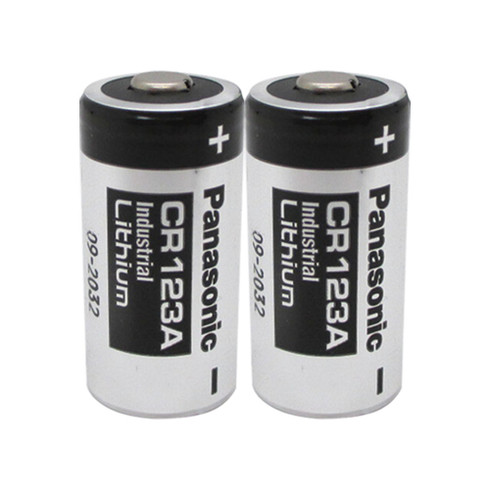
COMMODITY: CR123A Lithium metal batteries packed with equipment, with up to two sets of spare batteries required to operate the equipment, not exceeding 5kg net mass of batteries per shipment; Not exceeding 1 gram (g) lithium metal content per cell. Unlimited packages per consignment.
MODE OF TRANSPORTATION: International Air
OVERVIEW
This transport data sheet is for shipments of lithium metal batteries within specific parameters, when contained in the equipment with which they will be used. They are not subject to the regulations, except for the extensive requirements contained in Packing Instruction 969, General Requirements and Section II.
This transport data sheet does not cover various special protocols for: prototype batteries, special approvals, damaged or defective batteries, combinations of lithium ion and metal batteries or combinations of lithium batteries both contained in and packed with equipment, and batteries in vehicles.
| PROPER SHIPPING NAME: | Lithium metal batteries Packed with equipment (Including lithium alloy batteries | LABEL: | No |
| IDENTIFICATION NUMBER: | UN 3091 | PLACARD: | |
| HAZARD CLASS/DIVISION: | 9 | EMERG. INFO: | No |
| PACKING GROUP: | None | TRAINING: | Adequate Instruction |
| DOCUMENT: | No | PACKAGING: | Non spec |
| MARKING: | yes |
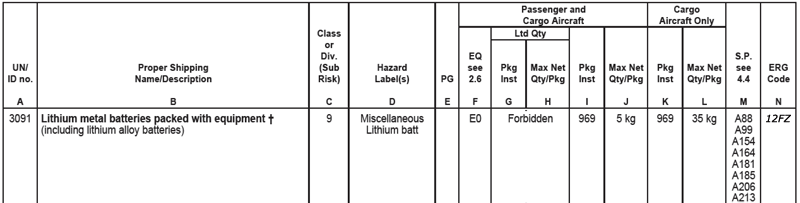
HAZMAT TABLE
____________________________________________________________
Classification
This transport data sheet uses the small lithium metal cells and batteries exceptions in IATA Packing Instruction 969 Section II. Excepted lithium metal cells may not exceed 1 gram (g) lithium metal content each.
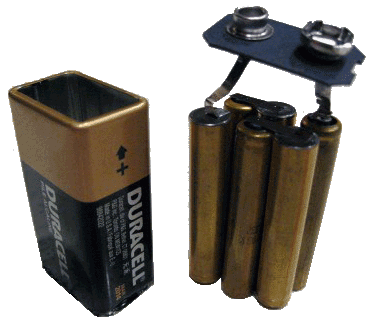
A battery is a collection of cells (Duracell 9v). Cells are typically cylindrical in shape. A single cell “battery” (CR123A) is considered a cell. The CR123A meets the criterion not to exceed 1g lithium metal content.

Lithium cells and batteries must meet requirements of the UN Manual of Tests and Criteria. The manufacture must record the test results and maintain them (indefinitely).
Citation: IATA DGR, PI 969 Section II
PACKAGING INFORMATION
General requirements
The following requirements apply to al lithium …..
Packaging for cells contained in equipment must meet the additional requirements of IATA DGR PI 969:
- Cells and/or batteries must:
- be completely enclosed in inner packagings then placed in a strong rigid outer packaging; or
- be completely enclosed in inner packaging then placed with equipment in a strong rigid outer packaging
- the equipment must be secured against movement within the outer packaging
- the number of cells or batteries in each package must not exceed the number required for the equipment’s operations plus two (2) spare sets;
- Each package of cells or batteries or the completed package must be capable of withstanding a 1.2 drop test in any orientation without:
- damage to cells or batteries contained therein;
- shifting of the contents so as to allow battery to battery (or cell to cell) contact;
- release of contents.
Citation: IATA DGR, PI 969
SHIPPING PAPER REQUIREMENTS
A dangerous goods declaration is not required.
The shipper must ensure that all pallicable
If an air waybill is used (not required), the air waybill must be marked “Lithium metal batteries, in compliance with Section II of PI 969”. UPS requires, when not using an air waybill, for this to be marked either on the address label or next to the lithium battery mark.
Citation: IATA DGR PI 969 Section II, Additional Requirements
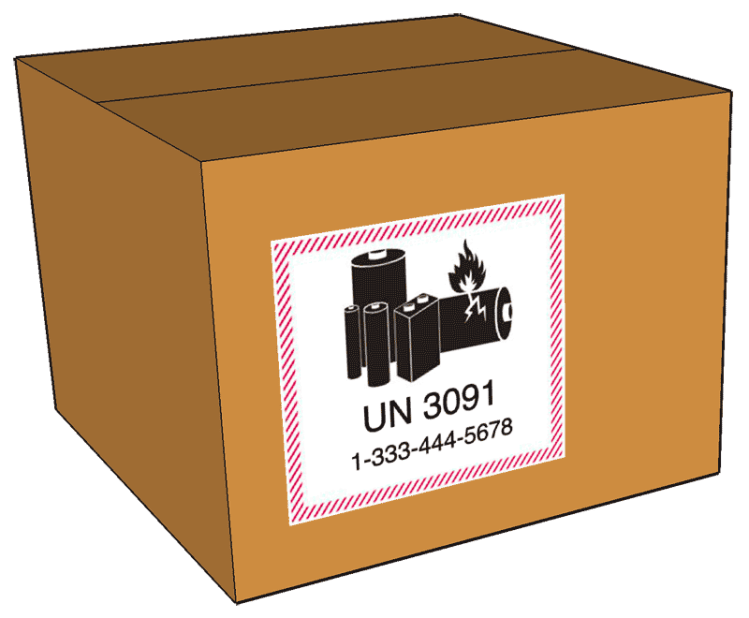
CARTON MARKING
The lithium battery mark is required:
OVERPACKS
Overpacks not recommended.
Training
Each person who prepares a package for transport containing lithium cells or batteries, including cells or batteries packed with, or contained in, equipment in accordance with the conditions and limitations of this transport data sheet, must receive adequate instruction on these conditions and limitations, commensurate with their responsibilities.
 WRAP Transport Data Sheets